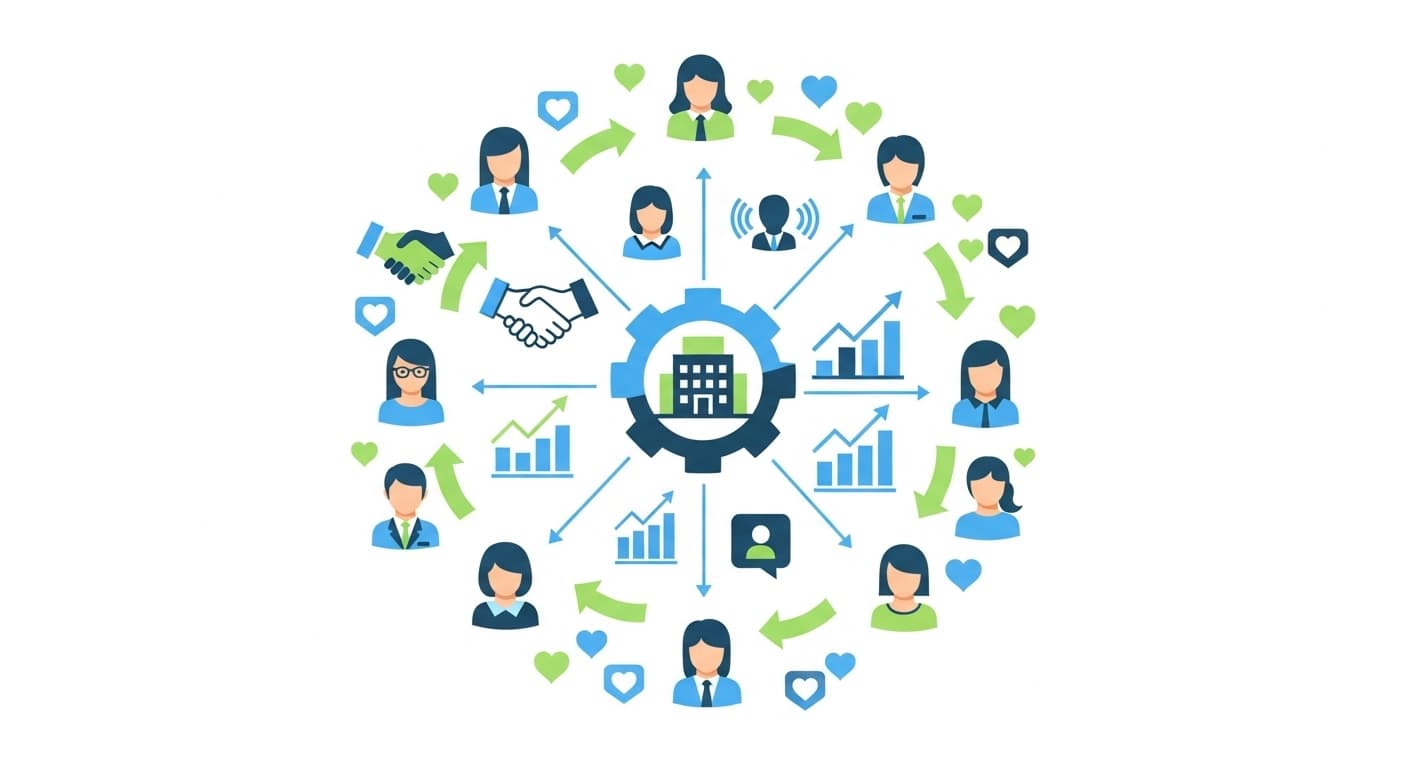
Stop Losing Customers: How CRM Systems Boost Retention by 27%
The Hidden Cost of Customer Churn
Most service businesses are obsessed with getting new customers. They spend thousands on Google Ads, Facebook campaigns, SEO, and lead generation. They track their cost per lead, conversion rates, and customer acquisition cost.
But they completely ignore the customers they already have.
Here's the brutal truth: acquiring a new customer costs 5x more than retaining an existing one. Yet 68% of customers leave because they feel you don't care about them—not because of price, not because of quality, but because you made them feel forgotten.
Think about that. You spent $500 to acquire a customer. You did great work. They were happy. Then you never contacted them again. A year later, they need your service again. Do they call you? No. They don't even remember your name. They search Google and call whoever shows up first.
You lost a customer you already paid to acquire. And now you have to spend another $500 to acquire a replacement.
This is the customer churn death spiral, and it's killing your business.
What is CRM and Why It Actually Matters
CRM stands for Customer Relationship Management. But that's a terrible name because it makes it sound like software, when it's really a strategy.
At its core, CRM is about tracking every interaction with your customers so you can provide personalized, proactive service that makes them feel valued.
A proper CRM system tracks:
- Contact information: Name, phone, email, address
- Service history: What services they've purchased, when, and for how much
- Communication history: Every call, email, text, and conversation
- Preferences: Preferred contact method, best time to call, special requests
- Equipment/property details: What HVAC system they have, when it was installed, warranty info
- Upcoming needs: When they're due for maintenance, when equipment needs replacement
- Lifetime value: How much they've spent with you total
- Referral history: Who they've referred to you
This information allows you to provide service that feels personal and proactive, not generic and reactive.
The 27% Retention Boost (And What It's Worth)
Studies show that businesses with robust CRM systems boost customer retention rates by up to 27%. This isn't just about managing contacts—it's about building lasting relationships that drive satisfaction and loyalty.
Let's do the math for a typical Kamloops service business:
Current situation:
- 500 customers
- 60% retention rate (300 customers return)
- $2,000 average lifetime value per customer
- Annual revenue from repeat customers: $600,000
With 27% retention improvement:
- 500 customers
- 76% retention rate (380 customers return)
- $2,000 average lifetime value
- Annual revenue from repeat customers: $760,000
- Additional revenue: $160,000
That's $160,000 in additional revenue without spending a dollar on advertising. Just by keeping more of the customers you already have.
But it gets better. Retained customers:
- Spend 67% more than new customers
- Refer an average of 2.3 new customers
- Cost nothing to acquire (you already paid that cost)
- Are more forgiving when things go wrong
- Provide valuable feedback to improve your service
When you factor in these benefits, that 27% retention improvement is worth closer to $300,000-$400,000 in total business impact.
Reactive vs. Proactive Service: The Critical Difference
Without CRM, you're reactive. Customers call when something breaks. You fix it. You don't hear from them again until the next emergency. Maybe they call you. Maybe they call someone else. You have no idea.
With CRM, you're proactive. Your system reminds you when customers are due for maintenance, seasonal service, or equipment replacement. You reach out before they have a problem.
Here's what this looks like in practice:
Reactive Service (No CRM):
Customer: Calls in July because their AC stopped working
You: "We can get someone out in 3 days"
Customer: "3 days?! It's 35 degrees! I'll call someone else"
Result: Lost customer, lost revenue, bad review
Proactive Service (With CRM):
Your system: Alerts you in April that Customer X is due for AC maintenance
You: Send text: "Hi Sarah, it's Joe from Kamloops HVAC. Your AC is due for its annual maintenance. We have openings next week. Book now to avoid the summer rush: [link]"
Customer: Books maintenance
You: Service the AC, identify a worn part, replace it
Result: AC doesn't break down in July. Customer is happy. You got paid for maintenance AND the part replacement. Customer tells their friends about your great service.
See the difference? Proactive service prevents problems, generates revenue, and builds loyalty. Reactive service is stressful, unpredictable, and leads to churn.
Real Example: HVAC Company in Kamloops
Let me share a real example from a local HVAC company that implemented proper CRM in early 2025.
Before CRM (2024):
- Customer database: Excel spreadsheet with names and phone numbers
- Maintenance reminders: None (customers had to remember to call)
- Repeat customer rate: 42%
- Maintenance contracts: 23
- Annual revenue: $680,000
After CRM (2025):
- Customer database: Full CRM with service history, equipment details, preferences
- Maintenance reminders: Automated texts/emails sent 30 days before due date
- Repeat customer rate: 71%
- Maintenance contracts: 147
- Annual revenue: $920,000
- Revenue increase: $240,000 (35%)
The owner told me:
"The maintenance contracts alone changed everything. We used to do 23 maintenance calls per year—basically just our friends and family who remembered to call. Now we do 147, and they're all scheduled in advance during our slow season. That's $14,700 in guaranteed revenue, plus all the repairs and replacements we identify during maintenance. And because we're servicing equipment regularly, we have way fewer emergency calls in summer. Our techs are happier, our customers are happier, and we're making more money."
The Power of Automated Follow-Up
Here's where CRM really shines: automated follow-up sequences that run without you thinking about them.
Post-Service Follow-Up
Day 1: Service completed
Day 2: Automated text: "Hi Sarah, thanks for choosing Kamloops HVAC. How did we do? Reply with a rating 1-5"
If 4-5: "Thanks! Would you mind leaving us a Google review? [link]"
If 1-3: "We're sorry we didn't meet expectations. Our manager will call you today to make it right."
This accomplishes three things:
- Shows you care about their experience
- Generates reviews from happy customers
- Catches problems before they become bad reviews
Seasonal Reminders
September: "Winter is coming! Time to schedule your furnace maintenance. Book now: [link]"
April: "Summer is around the corner. Get your AC serviced before the heat hits. Book now: [link]"
These reminders generate 40-60 service calls per year that would never have happened otherwise. At $150 per maintenance call, that's $6,000-$9,000 in revenue from two automated messages.
Equipment Replacement Reminders
Your CRM knows that Customer X installed a water heater in 2018. Water heaters last 8-12 years. In 2026, the system sends:
"Hi John, your water heater is 8 years old and approaching the end of its typical lifespan. We're offering $200 off new installations this month. Want a free quote? [link]"
This is proactive sales. You're not being pushy—you're providing valuable information at exactly the right time. And you're first in line when they're ready to buy.
Win-Back Campaigns
Customer hasn't used your service in 18 months? The system sends:
"Hi Sarah, we haven't seen you in a while! We'd love to earn your business again. Here's $50 off your next service: [code]"
This recovers 15-20% of dormant customers. They didn't leave because they were unhappy—they just forgot about you. A simple reminder brings them back.
Integration: The Make-or-Break Factor
A CRM that sits separate from your other systems is worse than useless—it's just more work.
Your CRM must integrate with:
Scheduling/Dispatch Software
When a customer bookings an appointment, it goes into your CRM automatically. When a tech completes a job, the service history updates automatically. No manual data entry.
Accounting System
When you invoice a customer, it records in the CRM. You can see their payment history, outstanding balances, and lifetime value without switching systems.
Phone System
When a customer calls, their information pops up automatically. You see their service history, preferences, and any open issues before you even answer. This makes every interaction feel personal.
Email and Text Messaging
All communication happens through the CRM. You can see the entire conversation history in one place. Automated messages go out on schedule without you touching them.
Website Forms
When someone fills out a contact form on your website, they're added to your CRM automatically. The system can send an immediate response and schedule follow-up.
When everything connects, customer data flows automatically. No manual entry. No missed follow-ups. No lost opportunities.
Upselling and Cross-Selling: The Hidden Revenue
CRM systems identify upsell and cross-sell opportunities automatically.
Service-Based Upsells
Customer had their furnace serviced? The system flags them for AC maintenance.
Customer had a drain cleaned? The system suggests annual drain maintenance contracts.
Customer had an electrical panel upgraded? The system recommends whole-home surge protection.
Product-Based Upsells
Customer installed a basic thermostat? Six months later, offer an upgrade to a smart thermostat.
Customer has an old water heater? Offer a tankless upgrade.
Customer has standard air filters? Offer premium HEPA filters.
Cross-Selling to Business Customers
Customer uses you for residential service? They might need commercial service for their business.
Customer owns rental properties? They might need property management services.
These opportunities are invisible without proper tracking. With CRM, they're automatic revenue generators.
One plumbing company we work with generates $40,000+ per year in upsell revenue just from automated suggestions. That's revenue they weren't even looking for.
The Kamloops Advantage: Why Retention Matters More Here
For Kamloops service businesses, customer retention is even more critical than in larger markets.
Why? Because our market is smaller. There are only so many homeowners and businesses in the Thompson-Nicola region. You can't afford to lose customers and just replace them with new ones indefinitely.
In Vancouver, you can lose 100 customers and acquire 100 new ones without much impact. In Kamloops, if you lose 100 customers, you've lost a significant portion of your addressable market.
Plus, word-of-mouth matters more in smaller communities. When you provide great service and stay in touch, customers tell their friends and family. When you provide poor service or disappear, they tell even more people.
Proper CRM turns one-time customers into lifetime clients who refer their friends. That's how local businesses thrive in markets like Kamloops.
Implementation: The 90-Day Plan
Week 1-2: Data Migration
- Choose your CRM system
- Import existing customer data
- Clean up duplicates and errors
- Add missing information (service history, equipment details)
Week 3-4: Integration
- Connect CRM to scheduling software
- Connect to accounting system
- Connect to phone system
- Connect to email/SMS platform
- Test all integrations
Week 5-6: Automation Setup
- Create post-service follow-up sequence
- Create seasonal reminder campaigns
- Create equipment replacement reminders
- Create win-back campaign
- Set up review request automation
Week 7-8: Team Training
- Train office staff on CRM basics
- Train techs on mobile app
- Create standard operating procedures
- Do practice runs
Week 9-12: Launch and Optimize
- Go live with full system
- Monitor automation performance
- Adjust messaging based on response rates
- Track retention metrics
Choosing the Right CRM for Service Businesses
Not all CRMs are created equal. Here's what matters for service businesses:
Must-Have Features:
- Service history tracking: Not just contact info, but detailed service records
- Equipment/asset tracking: What equipment customers have, when installed, warranty info
- Scheduling integration: Must connect to your dispatch system
- Mobile app: Techs need access in the field
- Automated follow-up: Set-it-and-forget-it campaigns
- Reporting: Track retention, lifetime value, campaign performance
Nice-to-Have Features:
- Customer portal (customers can view service history, book appointments)
- Estimate/proposal generation
- Inventory management
- Route optimization
- Payment processing
Popular Options:
- ServiceTitan: Best for larger HVAC, plumbing, electrical companies
- Jobber: Great for small to mid-size service businesses
- Housecall Pro: Good for solo operators and small teams
- Custom solutions: For businesses with unique needs
Common Mistakes to Avoid
1. Choosing a CRM that doesn't integrate. If it doesn't connect to your other systems, you'll abandon it within 3 months.
2. Not cleaning your data first. Garbage in, garbage out. Fix duplicates and errors before importing.
3. Over-automating. Start with 2-3 automated campaigns. Add more once those are working.
4. Not training your team. If your team doesn't use it, it's worthless. Invest in training.
5. Forgetting to update information. CRM only works if data is current. Make updating customer info part of every service call.
6. Not tracking results. Monitor retention rates, campaign performance, and ROI. Adjust based on data.
The Bottom Line
Customer retention is the most underutilized growth strategy in service businesses. Everyone focuses on getting new customers. Almost nobody focuses on keeping the ones they have.
But the math is clear: retaining customers is 5x cheaper than acquiring new ones, and a 27% improvement in retention can add $160,000+ in annual revenue for a typical service business.
Proper CRM makes retention automatic. It reminds you when to reach out. It personalizes every interaction. It identifies upsell opportunities. It recovers dormant customers.
And in a market like Kamloops where word-of-mouth matters and the customer base is finite, retention isn't just a nice-to-have—it's essential for long-term survival.
The businesses thriving in Kamloops right now aren't necessarily the ones with the biggest marketing budgets. They're the ones that turn one-time customers into lifetime clients.
Be one of them.

About Travis Hutton
Founder of Hutton Tech Solutions. 15 years in construction, Red Seal candidate Carpenter. Helping Kamloops businesses grow through automated customer acquisition systems.